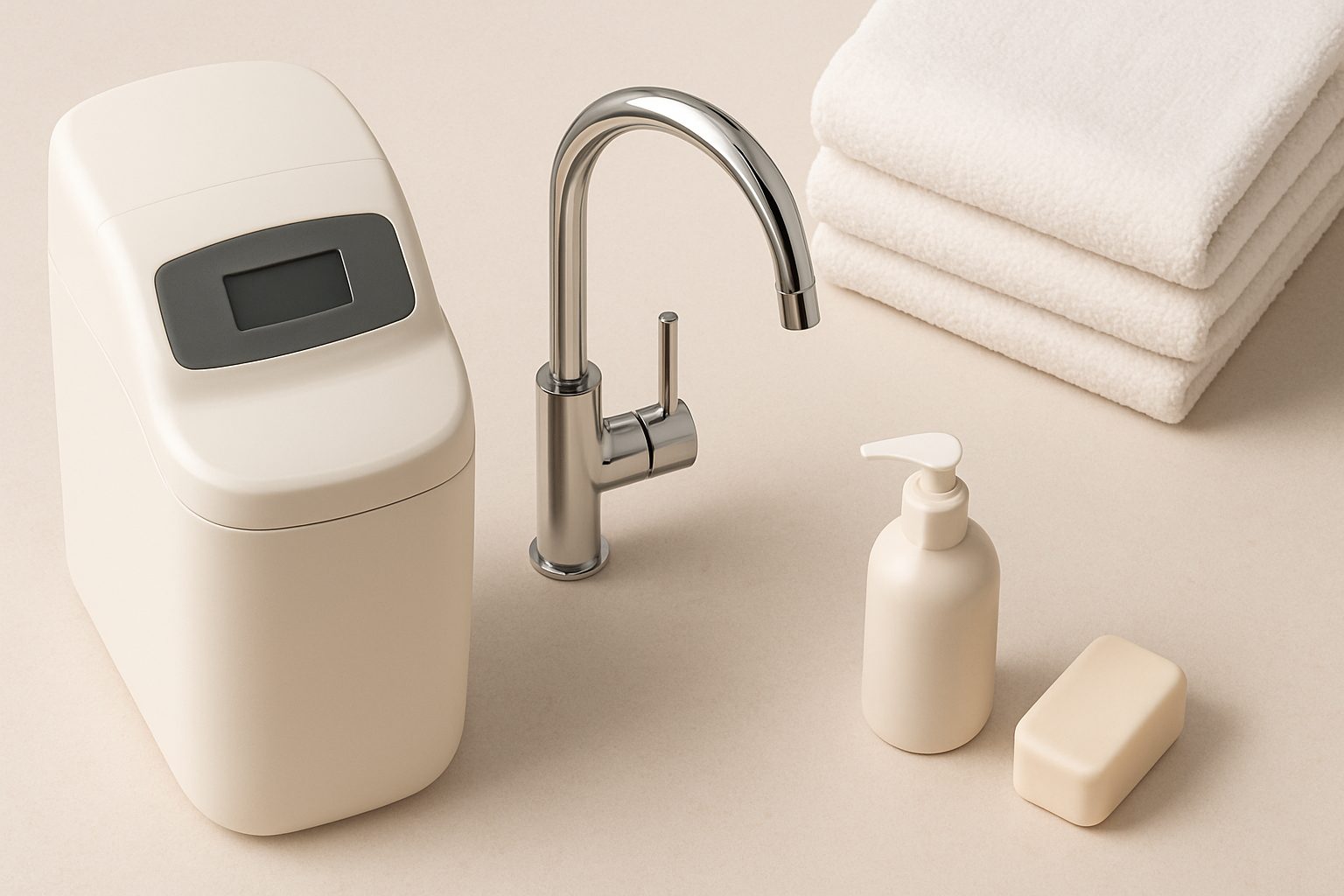
Best Water Softeners UK 2025: Ranked & Reviewed (All Budgets)
Hard water affects around 60% of UK homes, leaving limescale on taps, reducing soap effectiveness, and shortening the life of appliances. A water softener removes dissolved minerals—mainly calcium and magnesium—that cause this buildup. The best softener depends on your hardness level, space, budget, and whether you want ongoing running costs.
How Water Softeners Work
Salt-based ion exchange systems swap calcium and magnesium ions for sodium ones, softening water chemically. The resin bed gradually saturates and requires regeneration—backflushing with salt brine. This is the most effective method and works in nearly all situations.
Salt-free systems (also called conditioners) don't remove hardness minerals; they crystallise them so they don't adhere to surfaces. They're cheaper upfront but don't reduce actual water hardness, making them unsuitable if you have very hard water or sensitive skin.
Magnetic softeners claim to alter mineral structure using magnets. Evidence is weak, and they're best viewed as a gimmick rather than a real solution.
Salt-Based Systems (Most Effective)
Budget Range: £200–£600
Salt-based softeners are the gold standard in hard-water areas. They're energy-efficient once installed and don't require electricity—though newer models with timers do use minimal power. A 10-litre resin bed handles most households; larger properties need 12–15 litre tanks.
Pros:
- Genuinely soften water; reliable results
- Work in severely hard areas
- Low running costs after salt outlay
- Long resin life (10–15 years)
Cons:
- Require salt top-ups every 4–8 weeks (bags cost £8–15)
- Need planning permission in some water company areas
- Wastewater during regeneration
- Softened water contains slightly higher sodium (unsuitable for those on low-sodium diets)
Popular models include the Softpure SP3, a compact 10-litre system under £300, ideal for flats and small homes. The Harvey Water Softener is a British stalwart, robust and widely serviced, starting around £400.
Compact & Semi-Professional Systems
Budget Range: £500–£1,200
For larger homes or very hard water, semi-professional systems offer better capacity. The BWT AQA perla (12-litre, £600–£750) combines salt-based softening with optional carbon filtration, removing chlorine taste alongside hardness. The Pentair Fleck 5600 is a mechanised softener with digital metering and regeneration cycles set by hardness level; pricier (£900+) but suits demanding situations.
These need professional installation (£400–£800 labour), pushing total costs higher but ensuring correct plumbing and often including a guarantee.
Salt-Free Conditioners
Budget Range: £150–£400
The Eddy Water Softener (electronic salt-free, £200–£250) is the UK's most popular alternative. It uses electromagnetic pulses to change mineral crystallisation. It doesn't reduce hardness, but many owners report less visible limescale and softer-feeling water.
Pros:
- No salt to buy or refill
- No wastewater
- Lower capital cost
- No maintenance
Cons:
- Doesn't truly soften water; doesn't help hard-water skin issues
- Inconsistent results; some users report no difference
- Requires electricity
- Better for mild-to-moderate hardness only
Use these if you have slightly hard water (100–200 ppm) and mainly want to prevent kettle scale. In genuinely hard areas (over 300 ppm), they're unlikely to satisfy.
Magnetic Systems
Budget Range: £50–£200
Magnetic softeners wrap around pipes and claim magnets restructure mineral ions. Research from the British Water Softening Association and independent studies shows negligible effect. They don't reduce hardness or prevent limescale effectively.
Skip these unless you're willing to gamble. The money is better spent on a real salt-based system.
Choosing by Budget
Under £300: A compact salt-based system like the Softpure SP3 is unbeatable. You'll spend £10–15 monthly on salt but genuinely soften water.
£300–£600: Mid-range salt-based softeners (10–12 litre) or the BWT AQA perla if you want carbon filtration bundled in.
£600–£1,200: Semi-professional systems or larger capacity units for bigger homes or extremely hard water. Include professional installation.
Budget-conscious, mild hardness: Consider the Eddy as a low-cost entry point, but verify results match claims before committing.
Installation & Maintenance
Salt-based softeners require a bypass valve, drain connection, and plumbing into your main cold-water supply (usually under the kitchen sink). Some water companies require notification; a few mandate salt-based softeners in certain areas.
Top up salt every 4–8 weeks by adding bags to the brine tank—a simple 30-second job. Resin beds last 10–15 years. Annual descaling of the brine tank keeps systems running efficiently.
Semi-professional systems benefit from professional commissioning and may have annual service plans (£60–100).
Bottom Line
In genuinely hard-water areas, salt-based softening is the only solution that truly works. Budget £300–£600 for a reliable compact system plus £60–120 yearly in salt. If you're in a mildly hard area and want the cheapest option, a salt-free conditioner might suffice—but expect mixed results. Magnetic systems aren't worth the money.
Check your local water hardness via your water company's website; anything over 200 ppm warrants a salt-based system.
More options
- Amazon UK — Salt-Based Water Softeners (Amazon UK)
- Amazon UK — Salt-Free & Magnetic Water Conditioners (Amazon UK)
- Amazon UK — Water Softener Salt Blocks & Tablets (Amazon UK)
- Amazon UK — Water Hardness Test Kits (Amazon UK)
- Harvey Water Softeners & BWT UK — Brand Affiliate (Amazon UK)